Marjane Satrapi: Tributes pour in for late Persepolis author
The Iranian-French artist and filmmaker who humanized a revolution through ink and paper has died in Paris at the age of fifty-six.

Marjane Satrapi, the singular Iranian-French artist and filmmaker who transformed the graphic novel into a medium for global political empathy, has died in Paris at the age of 56. Her passing, confirmed by several cultural foundations and reported by international news outlets this week, marks the end of a career that bridge the divide between East and West through the visceral honesty of black-and-white ink. Satrapi had been living and working in the French capital for years, where her most famous work, Persepolis, was first born before becoming a cornerstone of modern literary and cinematic history.
The significance of Satrapi’s death cannot be overstated within the context of the global cultural landscape. At a time when geopolitical conflict often reduces human lives to mere statistics or ideological symbols, Satrapi offered a stubborn, deeply personal counter-narrative. She was more than just an illustrator; she was a witness who insisted that the story of the Iranian revolution was a story of family, punk rock, and the universal desire for freedom. Her loss is being felt not just in the halls of the Cannes Film Festival but in every high school classroom and library where her work continues to challenge how audiences perceive the Middle East and the immigrant experience.
According to reporting from Anewz, Satrapi’s death follows a period of immense personal loss, coming just a year after the passing of her husband. The news has sent a shockwave through the international creative community, with tributes flooding in from fellow artists and political figures who viewed her as a champion for the marginalized. As noted by the publication, her career was defined by her ability to weave her own autobiography into a larger historical fabric, making the complex politics of 1970s and 80s Iran accessible to a global audience that might otherwise have looked away. The breadth of her influence essentially redrew the map for what a visual memoir could achieve, particularly for voices speaking from the diaspora.
In Paris, a city that adopted Satrapi and where she found the artistic freedom to document her exile, the mourning has been profound. MSN reports that the creator of Persepolis died surrounded by a legacy that includes not just books, but an Academy Award-nominated film that remains a staple of world cinema. Her work often appeared on lists of essential viewing and reading, such as the New Times recommendations of films that challenge our thinking, precisely because she refused to simplify her characters or their struggles. She viewed the world through a lens of sharp humor and deep sorrow, often at the same time, a duality that made her one of the most relatable figures in contemporary art.
The trajectory of her career was often cited alongside other major cultural shifts in how brands and artists communicate. While the industry today sees high-profile marketing wins for playful partnerships, as highlighted by The Drum Awards for Marketing, Satrapi stood as a reminder of the power of the solitary author. She didnt need a corporate collaboration or a massive marketing engine to find her audience; she needed only a pen and the courage to tell the truth about her own life. This raw authenticity is what eventually led her to the highest honors at Cannes, where the 2007 film adaptation of her graphic novel won the Jury Prize and cemented her status as a titan of storytelling.
Historically, Satrapi arrived at a moment when the West needed a bridge to understand the internal lives of Iranians. Before Persepolis, much of the Western understanding of the Islamic Revolution was filtered through news broadcasts and political rhetoric. Satrapi replaced those detached perspectives with the image of a young girl who loved Iron Maiden and wrestled with the contradictions of her faith and her family’s communist leanings. She paved the way for a generation of artists—particularly women—to use their personal histories as tools of resistance against authoritarianism and cultural stereotypes alike.
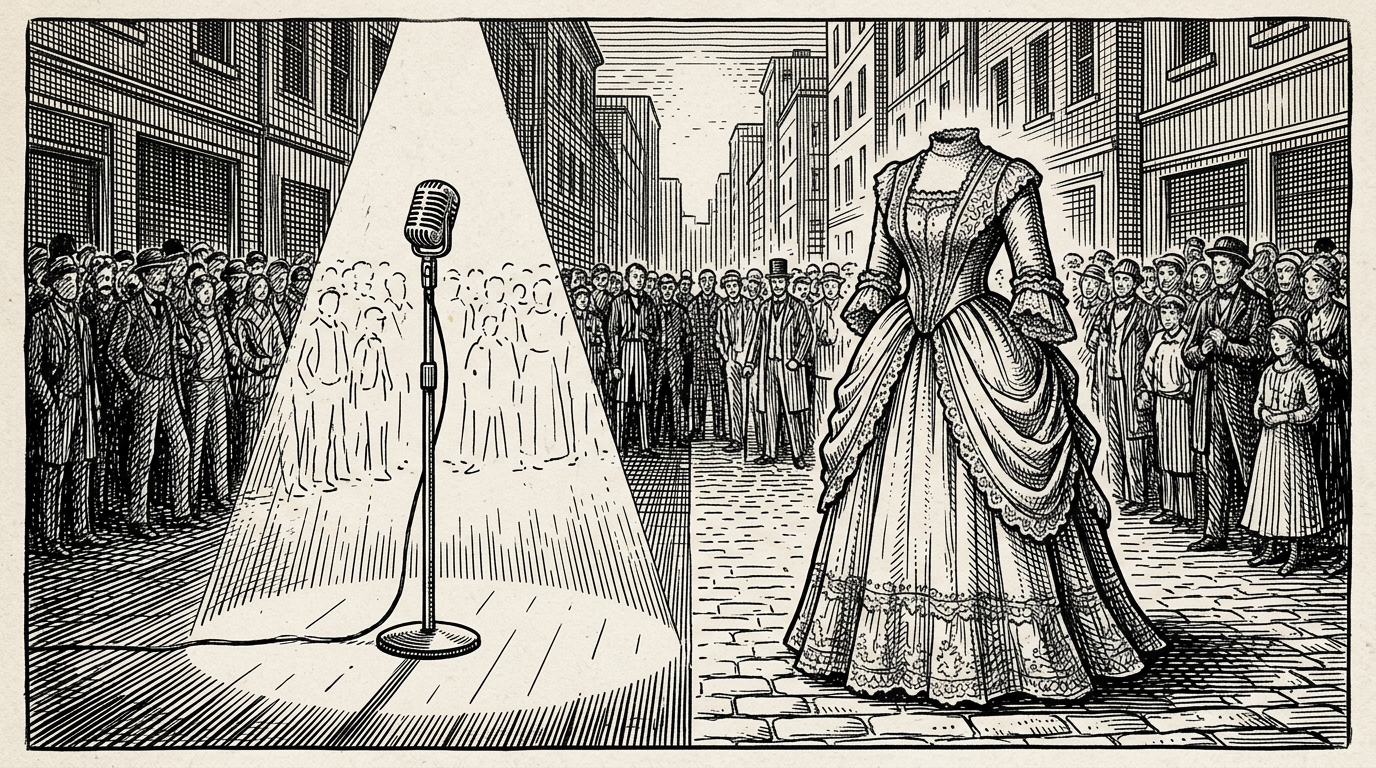
Her influence extended far beyond the page and the screen, influencing how we think about the act of memory itself. By using a stripped-back, high-contrast visual style, she showed that the most complex emotions often require the simplest delivery. It was a style that defied the typical expectations of the "comic book" and demanded respect from the literary establishment, eventually leading to Persepolis being taught in universities worldwide. Her work remains a testament to the fact that while governments may change and borders may close, the human story is stubbornly persistent and inherently shared.
Looking ahead, the question is how the artistic community will carry the torch she lit. Satrapi was never one for quiet mourning or polite silence; she was a firebrand who believed that art must be dangerous to be effective. As the world navigates a new era of global tension and visual storytelling continues to evolve into shorter, faster formats, her long-form dedication to the truth feels more vital than ever. We watch now to see how the next generation of exiled artists takes up her mantle, using their own ink to remind us that behind every headline is a person with a story worth telling. Satrapi may be gone, but her lines remain etched on the cultural conscience, sharp and permanent.
Sources & References
- AnewzMarjane Satrapi: Tributes pour in for late 'Persepolis' authorhttps://anewz.tv/culture/culture-news/20630/famous-french-iranian-author-marjane-satrapi-passes-away/news
- MSNMarjane Satrapi, creator of 'Persepolis', dies at 56https://www.msn.com/en-ca/news/insight/marjane-satrapi-creator-of-persepolis-dies-at-56/gm-GMFE5D2D0E?gemSnapshotKey=GMFE5D2D0E-snapshot-26&uxmode=ruby
- The New TimesWeekend watch: Five films that challenge the way we thinkhttp://www.newtimes.co.rw/article/36288/entertainment/cinema/weekend-watch-five-films-that-challenge-the-way-we-think/amp
- The DrumInside Dunkin's co-creative partnership that made protein playful with Megan Thee Stallionhttps://www.thedrum.com/awards-case-study/inside-dunkin-s-co-creative-partnership-that-made-protein-playful-with-megan-thee-stallion
About the correspondent
Leo BanksCulture
Culture Correspondent. Observational reporting on the new analog.